
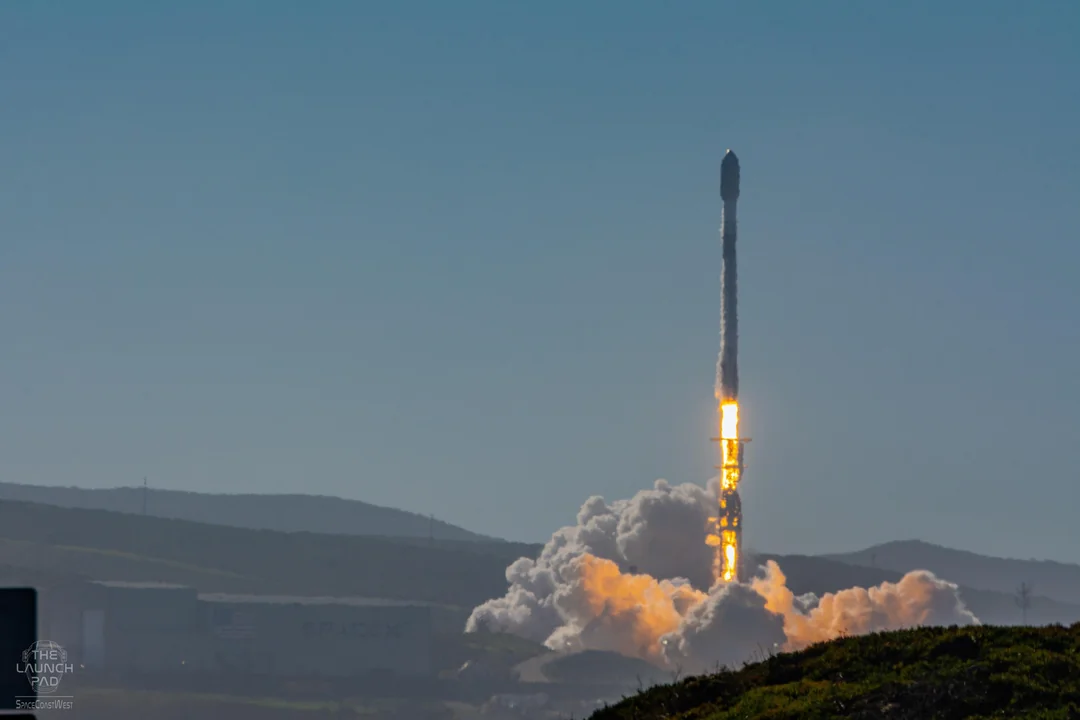
For years, the commercial space industry has celebrated launches.
How many rockets flew? How many satellites reached orbit? Which constellation grew fastest?
Rocket Lab’s proposed $8 billion acquisition of Iridium suggests the conversation has fundamentally changed.
The next chapter of the space economy won’t be won simply by putting hardware into orbit.
It will be won by those who own the infrastructure that makes space commercially indispensable.
This isn’t just an acquisition
On the surface, Rocket Lab is buying one of the world’s most recognised satellite communications companies.
Look a little deeper, however, and the picture becomes far more interesting.
Rocket Lab isn’t simply acquiring 66 operational satellites. It is acquiring global L-band spectrum rights, decades of regulatory approvals, long-standing government and defence relationships, aviation and maritime customers, engineering expertise, and more than two million subscribers. These are assets that cannot be replicated quickly, regardless of how much capital is available.
In many respects, Rocket Lab has purchased twenty-five years of trust.
The era of ecosystem companies
One of the most insightful observations emerging across the NewSpace sector is that the industry is shifting from building products to building ecosystems.
The first commercial space race was about proving launch capability.
The second was about deploying constellations.
The third is about controlling entire value chains.
Launch vehicles, satellite manufacturing, spectrum, software platforms, ground infrastructure, government relationships, application developers and recurring service revenues increasingly form part of a single integrated business.
This is the same evolution seen across many technology industries. Companies that control multiple layers of the stack generally create stronger competitive advantages than those operating in only one.
Rocket Lab appears to have recognised this reality.
Vertical integration is becoming the competitive advantage
The obvious comparison is SpaceX.
SpaceX no longer competes solely as a launch provider. It designs spacecraft, manufactures satellites, launches them, operates the network and sells services directly to customers.
Rocket Lab is following a similar trajectory.
By combining launch capability, spacecraft manufacturing and Iridium’s established communications network, the company moves from being a supplier to becoming infrastructure.
Infrastructure businesses tend to enjoy characteristics that investors value highly:
- predictable recurring revenue
- long customer relationships
- high switching costs
- valuable spectrum assets
- significant barriers to entry
That is a fundamentally different proposition from relying solely on launch cadence.
Why this matters for Satellite IoT
For those of us working in Satellite IoT, perhaps the biggest lesson is this:
Connectivity alone is becoming less important than the ecosystem built around it.
Farmers do not buy satellites.
Utilities do not buy constellations.
Environmental agencies do not buy launch vehicles.
They buy outcomes.
They buy water quality monitoring.
They buy predictive maintenance.
They buy methane detection.
They buy crop intelligence.
Satellite connectivity is simply one enabling layer within a much larger digital service.
The operators that thrive over the next decade are likely to be those who make connectivity almost invisible, embedding it within complete solutions that combine sensors, AI, analytics, cloud platforms and industry expertise.
Consolidation is only just beginning
Rocket Lab’s move follows a broader pattern emerging across the satellite sector.
Scale increasingly matters. Spectrum matters. Customer relationships matter. Recurring revenues matter.
As the industry matures, acquisitions are becoming strategic rather than opportunistic. Companies are no longer buying technology simply because it is innovative; they are buying capabilities that complete their ecosystems and strengthen their long-term market position.
This trend is unlikely to stop with Rocket Lab and Iridium.
Expect further consolidation as operators, launch providers, satellite manufacturers, software companies and data businesses seek to own larger portions of the value chain.
The opportunity for the wider industry
Yet consolidation should not be viewed as bad news for smaller players.
Quite the opposite.
Integrated infrastructure creates opportunities for specialist innovators.
Sensor manufacturers.
Edge AI companies.
Environmental monitoring specialists.
Agricultural technology providers.
Maritime analytics businesses.
Digital twins.
Application developers.
The value increasingly lies not in transporting data from Earth to orbit, but in transforming that data into decisions.
Satellite IoT has always been about far more than connectivity.
It is about making remote assets visible.
Making critical infrastructure measurable.
Making environmental change understandable.
Making industries more resilient.
A defining moment
Rocket Lab’s acquisition of Iridium may ultimately be remembered as more than one of the largest commercial space transactions to date.
It could mark the moment when the market recognised that the future of space is not built around rockets alone.
It is built around infrastructure.
And those companies that own the infrastructure—from orbit to application—will shape the next generation of the global space economy.
Satellite IoT – more than connectivity.
Making
remote
assets
visible
Making
environmental
change
understandable
Making
critical
infrastructure
measurable
Making
industries
more
resilient