The satellite IoT market is rapidly expanding, with a growing number of operators offering specialized services for different applications. The key factors that differentiate these providers include the type of satellite network (LEO, MEO, GEO), the target use cases (from low-power sensor networks to high-throughput data services), and the industries they serve. Each operator brings unique strengths, whether in coverage, latency, cost, or service integration.
The market now spans classic L-band/S-band operators, LoRaWAN-over-satellite, proprietary small-packet IoT, and 3GPP NTN / NB-IoT services.
Last updated: May 2026
| Operator | Tech | Orbit | Primary Focus | Notes |
|---|---|---|---|---|
| Lacuna Space | LoRaWAN | LEO | Low-power sensors | Direct-to-satellite LoRaWAN |
| Sateliot | NB-IoT NTN | LEO | 3GPP NTN | Standard cellular NTN |
| Skylo | NTN service layer | GEO/Hybrid | Carrier integration | Works with MNOs |
| Iridium | L-band | LEO | Industrial/global | Mature two-way network |
| Kinéis | Argos/IoT | LEO | Environmental/agri | Small-packet IoT |
| Myriota | Proprietary LPWAN | LEO | Remote sensing | Ultra-low-power deployments |
| OQ Technology | NB-IoT NTN | LEO | 5G NTN IoT | Standards-based cellular NTN |
| Globalstar | L/S-band | LEO | Asset tracking | Two-way satellite IoT |
| Orbcomm | Multi-network IoT | LEO | Logistics/maritime | Long-established M2M operator |
| EchoStar Mobile | LoRa/Hybrid IoT | GEO/Hybrid | European IoT | LoRa-enabled satellite IoT |
| FOSSA Systems | LoRaWAN | LEO | Tiny IoT devices | Pico-satellite architecture |
| Plan-S | LoRaWAN | LEO | Industrial IoT | Satellite LoRa connectivity |
| Hiber | Proprietary IoT | LEO | Remote monitoring | Satellite-enabled field sensing |
| ORBCOMM | Satellite M2M | LEO | Fleet/logistics | Mature industrial platform |
| Inmarsat | L-band | GEO | Maritime/industrial | Global MSS operator |
| Thuraya | L-band | GEO | Remote industrial | Regional MSS and IoT |
| Omnispace | S-band NTN | Hybrid/LEO | Future NTN services | Emerging hybrid architecture |
| Lynk Global | Direct-to-device | LEO | Cellular from space | “Cell tower in space” model |
| AST SpaceMobile | Direct-to-device | LEO | Broadband NTN | Emerging industrial NTN potential |
Aselsan

Operator: ASELSAN
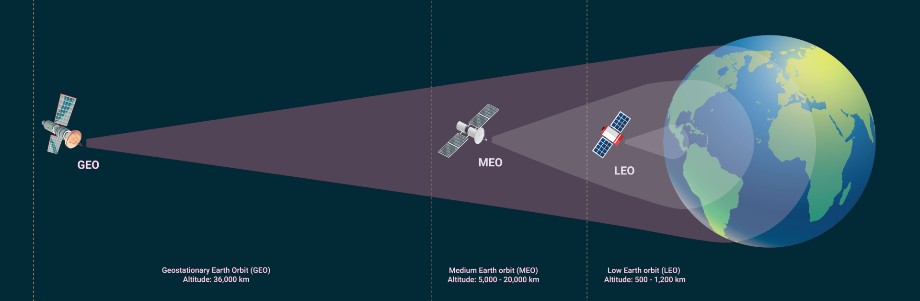
Orbit: Low Earth Orbit (LEO), sun-synchronous, ~510 km altitude
Mission: Satellite-based IoT connectivity and remote data collection
Technology:
Small satellite platform designed and manufactured in-house, implementing narrowband IoT communications for low-power sensor telemetry
Coverage:
Designed for international coverage over time via polar sun-synchronous orbit, enabling IoT connectivity in remote and infrastructure-poor regions
Connectivity Model:
Low-power, narrowband satellite IoT telemetry
Optimised for small, infrequent data transmissions rather than continuous or high-throughput links
Radio Characteristics:
Primary observed UHF downlink around ~401.775 MHz using GMSK modulation (~9.6 kbps)
Additional S-band hardware (~2.258 GHz) reported; operational role not publicly confirmed
Status:
In orbit and operational, with initial telemetry successfully received by ASELSAN ground stations
Astrocast

Technology: Astrocast has previously operated a nanosatellite network in LEO.
Coverage: Currently not available
NOTE: It appears that Astrocast constellation as of first half of 2026 has de-orbited and there is currently no service with uncertainty in the market about whether new launches will be possible.
Service: Currently unavailable
Target Market: Various sectors.
EchoStarMobile

Technology: EchoStar Mobile leverages an S-band satellite system combined with a terrestrial network to deliver hybrid satellite-terrestrial connectivity. Their innovative use of DVB-SH technology ensures seamless IP-based data and media delivery, enabling robust communication across Europe. However, following major spectrum transactions with SpaceX (sale of AWS-4, H-block, and AWS-3 licenses totaling ~$20B+), EchoStar has divested key U.S. direct-to-cell spectrum while retaining European S-band assets and partnering for Starlink Direct-to-Cell access.
Coverage: EchoStar Mobile provides mobile satellite services across Europe, including all 28 member states of the European Union. Their services are designed to offer reliable connectivity for various applications, including IoT, particularly in areas lacking terrestrial coverage.
Service: EchoStar Mobile provides reliable mobile satellite services, offering solutions such as IoT connectivity, satellite broadband, and direct-to-device communications. Their services cater to diverse applications, including asset tracking, remote monitoring, emergency response, and personal tracking, ensuring uninterrupted connectivity in challenging environments.
Target Market: EchoStar Mobile serves industries such as maritime, utilities, agriculture, pipeline operations, and emergency services. Their solutions are designed to support enterprises operating in remote and underserved regions, providing cost-effective, secure, and efficient satellite-based communication options.
Eutelsat
Technology: Eutelsat operates a fleet of GEO satellites.
Coverage: Developing a IoT connectivity service targeting small data transmission for IoT devices, aiming to serve sectors like agriculture, logistics, smart cities, and environmental monitoring.
Service: Through its ELO (Eutelsat LEO for Objects) constellation, Eutelsat is developing an IoT connectivity service, targeting small data transmission for IoT devices. The service is not currently commercial and appears to be slow in development.
Target Market: Eutelsat’s IoT services aim to serve the agriculture, logistics, smart cities, and environmental sectors.
Fleet Space Technologies
Technology: Fleet Space operates a LEO satellite constellation using advanced AI and seismic imaging for efficient data delivery.
Coverage: Fleet Space Technologies offers IoT connectivity, focusing on industrial applications such as mining, energy, and logistics. The company is expanding its satellite constellation to enhance coverage and capacity.
Service: Fleet provides real-time IoT connectivity for industries requiring subsurface imaging, asset monitoring, and remote operations.
Target Market: Fleet targets mineral exploration, defense, space exploration, and industrial IoT applications, emphasizing sustainable and innovative solutions.
Fossa Systems

Technology: Fossa Systems operates a constellation of picosatellites in low Earth orbit (LEO).
Coverage: Provides extensive IoT connectivity, particularly in remote areas without mobile coverage, through their constellation of small satellites.
Service: Fossa Systems offers affordable, low-power IoT connectivity services designed for small data transmissions. Their network of picosatellites is specifically engineered to provide connectivity to IoT devices in remote or underserved areas. Fossa’s technology is designed to work with low-cost, low-power devices, making it ideal for mass deployment.
Target Market: Fossa Systems targets sectors such as agriculture, environmental monitoring, asset tracking, and smart cities. Their services are particularly suited for use cases requiring low data volumes and long device battery life, such as sensor networks and remote monitoring applications.
Globalstar

Technology: Globalstar operates a constellation of LEO satellites.
Coverage: Offers coverage across most of the continental United States, Canada, Mexico, Europe, Australia, parts of South America, and portions of North and South Africa, Northeast Asia, and hundreds of miles offshore of these areas. However, coverage may vary, and actual availability can be influenced by factors such as gateway deployment and local licensing.
Service: The Globalstar IoT service provides low-cost, low-power satellite connectivity for IoT devices. Their SPOT and Simplex data services are designed for asset tracking, remote monitoring, and emergency management.
Target Market: Globalstar’s services are used in transportation, agriculture, energy, and emergency services.
HEAD Aerospace

Technology: HEAD Aerospace operates a constellation of small LEO satellites, focusing on Earth observation and IoT connectivity.
Coverage: HEAD Aerospace operates a constellation of satellites providing coverage for various applications, including IoT, Earth observation, and communication services. Specific details on the number of satellites and current coverage areas are limited.
Service: The company provides IoT services under the Skywalker Constellation, offering low-power, wide-area connectivity for IoT devices, particularly in remote or underserved regions. HEAD also integrates its satellite IoT services with Earth observation capabilities for enhanced data applications.
Target Market: HEAD Aerospace focuses on industries such as logistics, environmental monitoring, maritime, and infrastructure, particularly where the integration of IoT with Earth observation data can provide added value.
Hiber

Technology: Hiber operates a constellation of small LEO satellites.
Coverage: Offers IoT connectivity with a focus on remote monitoring and tracking applications, designed to be low-power and cost-effective for small data bursts.
Service: Hiber-branded IoT services and technology assets appear to have remained partially active through partnerships and inherited infrastructure. Hiber offers Hiberband, a IoT connectivity service with a focus on remote monitoring and tracking applications. Their service is designed to be low-power and cost-effective for small data bursts.
Target Market: Hiber focuses on agriculture, oil and gas, environmental monitoring, and logistics.
Inmarsat

Technology: Inmarsat operates a network of geostationary (GEO) satellites.
Coverage: Global coverage, excluding polar regions, with services extending from latitudes of −82° to +82°.
Service: The company offers Inmarsat IoT services through its IsatData Pro and BGAN M2M solutions. These services provide reliable connectivity for IoT devices globally, with an emphasis on low-power and small-data applications.
Target Market: Inmarsat’s IoT services are widely used in sectors like agriculture, environmental monitoring, mining, and maritime.
Iridium Communications

Technology: Iridium operates a global constellation of 66 low Earth orbit (LEO) satellites.
Coverage: True global coverage, including polar regions, providing low-latency data transmission for various applications.
Service: Iridium provides the Iridium IoT service, which offers global coverage for IoT devices. The service supports low-latency data transmission for various applications, including maritime, aviation, and remote infrastructure monitoring.
Target Market: Iridium’s IoT services are used in industries such as oil and gas, transportation, agriculture, and environmental monitoring.
Kepler Communications

Technology: Kepler operates a hybrid LEO constellation of nanosatellites and larger optical relay satellites, evolving from RF IoT to high-capacity optical data relay and on-orbit computing.
Coverage: Wide coverage via growing LEO network, with emphasis on real-time connectivity.
Service: Provides high-throughput space-to-space and space-to-ground optical data relay, on-orbit edge processing, hosted payloads, and legacy store-and-forward IoT/data services.
Target Market: Space missions (Earth observation, defense, science), maritime, logistics, remote sensing, and industries needing low-latency satellite connectivity and in-orbit data processing.
Kineis

Technology: Kinéis operates a constellation of Low Earth Orbit (LEO) satellites, designed specifically for IoT connectivity. Kinéis plans to have a constellation of small LEO satellites by 2024 to provide continuous coverage.
Coverage: Kinéis has deployed 25 satellites, with at least 20 publicly evidenced as operational in service to provide IoT connectivity, with a focus on maritime, logistics, and environmental monitoring sectors. offering wide coverage.
Service: Kinéis offers low-power, low-data-rate satellite IoT connectivity for a wide range of remote applications. The service focuses on low-bandwidth communication, enabling devices to transmit small packets of data, such as telemetry or sensor readings, from any location on Earth.
Target Market: Kinéis targets industries that require global IoT connectivity in remote or hard-to-reach locations, where traditional cellular networks are unavailable. Key markets include environmental monitoring, maritime tracking, agriculture, logistics, and smart infrastructure.
Lacuna Space

Technology: Lacuna Space operates a network of small LEO satellites.
Coverage: Lacuna Space is developing a satellite network to provide near-global IoT connectivity, focusing on integrating with existing LoRaWAN networks to offer seamless coverage, particularly in remote areas. They also offer an S band service including in South America. From May 2026 Lacuna have six operational satellites in low earth polar orbit providing a minimum of six 50byte messages per day in three passes. They have regulatory approval across Europe EU and non EU as well as multiple other geographies.
Service: Lacuna Space provides IoT connectivity using LoRaWAN protocol over satellites. Their service is designed for low-power, low-data-rate IoT devices that need connectivity in remote or difficult-to-reach areas. New launches are expected from mid 2025.
Target Market: Lacuna Space is ideal for agriculture, environmental monitoring, logistics, and smart city applications, especially in areas where traditional networks are unavailable or unreliable.
Myriota
Target Market: Myriota’s solution is ideal for industries like agriculture, environmental monitoring, logistics, and utilities. Its service is particularly suited for applications in areas with limited or no traditional network coverage, offering reliable data transmission for critical operations such as resource management and asset tracking.
Coverage: Myriota provides extensive IoT connectivity, focusing on low-cost and low-power applications. As of February 2025, Myriota expanded its constellation by adding four new satellites, enhancing coverage and capacity, particularly in regions like Mexico, Brazil, Chile, Argentina, and the Middle East. USA is expected in 2025.
Technology: Myriota utilizes a network of low Earth orbit (LEO) nanosatellites to provide IoT connectivity.
Service: Myriota delivers low-power, low-cost IoT connectivity without the need for terrestrial infrastructure. Using proprietary technology, Myriota enables small, battery-powered IoT devices to transmit data over long distances from remote and isolated areas. The service is designed for energy-efficient deployments, allowing devices to operate for years without battery replacement.
OQ Technology

Target Market: OQ Technology’s solution is aimed at industries including utilities, energy infrastructure, logistics, maritime monitoring, agriculture, mining, and environmental monitoring. The company focuses on enabling low-power IoT connectivity in remote or underserved regions where terrestrial cellular networks are unavailable or unreliable.
Coverage: OQ Technology is developing a Low Earth Orbit (LEO) satellite constellation designed to provide global NB-IoT connectivity using 3GPP-standard Non-Terrestrial Network (NTN) technology. The company has conducted demonstrations of direct-to-device NB-IoT connectivity from space and continues to expand its satellite capabilities and partnerships within the wider NTN ecosystem.
Technology: OQ Technology utilizes a LEO satellite constellation combined with 3GPP-standard NB-IoT and 5G NTN technology to enable direct satellite communication with compatible cellular IoT devices and modules.
Service: OQ Technology delivers standards-based satellite IoT connectivity designed to integrate with existing cellular IoT ecosystems. Unlike proprietary satellite IoT networks, the company’s approach focuses on compatibility with standard NB-IoT devices and telecom infrastructure, supporting low-power remote monitoring, industrial telemetry, and asset tracking applications without dependence on terrestrial coverage.
Plan-S

Technology: Plan-S is developing a constellation of small LEO satellites.
Coverage: Turkey with new geographies on line for 2025/6
Service: Plan-S focuses on providing affordable and accessible satellite IoT connectivity. Their services are designed to cater to small, low-power devices that require extensive coverage for applications such as asset tracking, remote monitoring, and smart agriculture.
Target Market: Plan-S is targeting sectors like logistics, agriculture, energy, and smart cities, with a focus on providing cost-effective IoT solutions that can operate in remote areas without traditional connectivity options.
Sateliot
Technology: Pioneering 5G NTN (NB-IoT) LEO constellation using 3GPP standards for direct connectivity with standard unmodified cellular IoT devices.
Coverage: Expanding LEO coverage with 6 satellites currently in orbit and 5 more planned for launch in 2026.
Service: Seamless 5G satellite IoT connectivity with terrestrial network roaming, low-power direct-to-device links, and hybrid satellite-terrestrial services.
Target Market: Industries requiring ubiquitous IoT connectivity such as agriculture, utilities, maritime, logistics, energy, smart cities, and remote asset monitoring.
SES
Technology: SES operates a fleet of GEO and medium Earth orbit (MEO) satellites.
Coverage: Offers extensive reach with steerable spot beams, enabling tailored coverage solutions across Europe, Africa, the Middle East, and the Asia-Pacific region.
Service: Principally a broadband/managed-connectivity operator rather than low-power direct-to-satellite IoT. SES offers O3b mPOWER and SES Networks for IoT applications, providing high-throughput, low-latency connectivity for more data-intensive IoT use cases. They also offer managed services for integrating IoT into enterprise networks.
Target Market: SES’s IoT solutions are targeted at industries requiring high data throughput, such as aviation, maritime, and energy.
Skylo

Technology: Standards-based 3GPP Rel-17 NTN (NB-IoT) service provider delivering direct-to-device satellite connectivity. Skylo operates a virtual RAN overlay on partner GEO satellite capacity (no owned constellation).
Coverage: Global coverage across major regions (over 70 million km² live), with seamless hybrid satellite-terrestrial roaming. Service: Direct-to-device NB-IoT connectivity for standard cellular IoT devices and modules via single SIM. Enables seamless switching between terrestrial and satellite networks for always-on IoT, plus support for SMS and emergency services.
Target Market: IoT applications in agriculture, utilities, maritime, logistics, energy, smart cities, automotive, wearables, and remote asset monitoring — especially where terrestrial coverage is unreliable.
Thuraya

Technology: Thuraya IoT & M2M Telemetry Solutions employs a robust global satellite network that extends connectivity beyond traditional terrestrial boundaries. Their scalable infrastructure ensures low-latency, secure data transmission—even in the most challenging and remote environments.
Coverage: Thuraya provides satellite communication services across Europe, Africa, the Middle East, Asia, and Australia, covering over 160 countries. Their services cater to various sectors, including maritime, land, and aeronautical communications.
Service: Thuraya provides comprehensive satellite-based IoT and M2M telemetry solutions designed for seamless fleet management, asset tracking, and remote monitoring. Their services integrate effortlessly with existing systems, delivering efficient, actionable insights and uninterrupted connectivity for critical applications.
Target Market: Thuraya’s platform is tailored for industries such as logistics, energy, agriculture, and critical infrastructure—empowering businesses to monitor operations, reduce costs, and make informed decisions with real-time data, no matter where they operate.
WISeSat (WISeKey)

WISeSat (WISeKey)
Technology: WISeSat operates a low Earth orbit (LEO) satellite constellation using software-defined radio (SDR) technology, integrated with hardware-root-of-trust and cryptographic security at the chip and network level.
Coverage: Provides extensive satellite IoT connectivity, with a particular emphasis on secure communications for remote and hard-to-reach environments.
Service: WISeSat offers low-power satellite IoT connectivity combined with embedded device identity, encryption and cybersecurity services. The network is designed for small, infrequent data transmissions and secure device authentication, rather than high-throughput communications.
Target Market: WISeSat targets applications where security and data integrity are critical, including industrial IoT, critical infrastructure, environmental monitoring, logistics, defence-adjacent use cases, and smart city deployments requiring secure end-to-end IoT communications.