Kepler Communications is a Canadian satellite communications company known for its innovative approach to providing global IoT connectivity through a constellation of Low Earth Orbit (LEO) satellites. Kepler’s satellite IoT offering is designed to address the need for reliable and cost-effective connectivity in remote and hard-to-reach areas, enabling real-time data transfer for IoT devices and applications.
Key Features of Kepler’s Satellite IoT Offering
LEO Satellite Constellation:
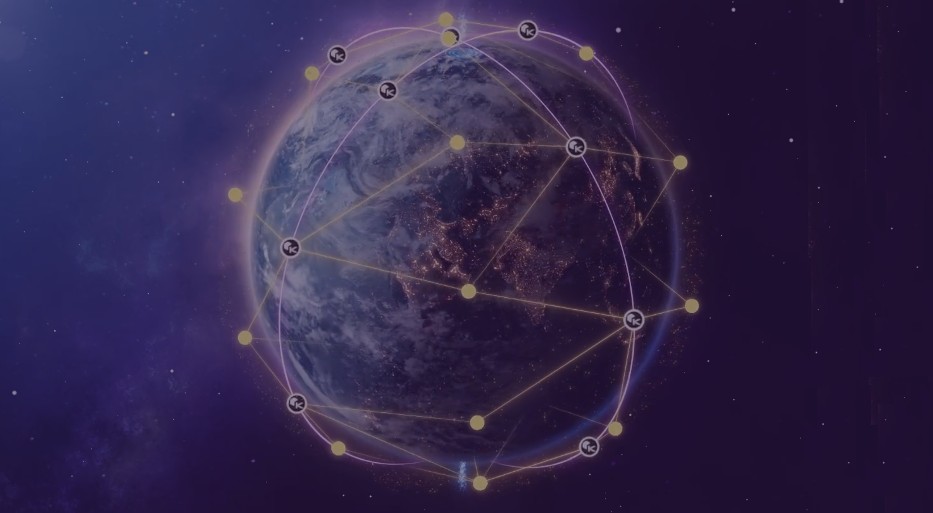
- Kepler operates a growing LEO satellite constellation that provides global coverage, even in areas where traditional cellular networks or terrestrial infrastructure are unavailable or unreliable. LEO satellites orbit much closer to Earth than geostationary satellites, enabling lower latency and more frequent communication with IoT devices.
- The company’s constellation is designed to handle store-and-forward communication, which allows IoT devices to send data to satellites that store it until they pass over a ground station, where it is then transmitted to the end user.
Global Data Services (GDS):
- Kepler’s flagship service, Global Data Services (GDS), offers low-power, low-latency IoT connectivity for applications such as asset tracking, environmental monitoring, and industrial IoT. The GDS system enables IoT devices to transmit small packets of data from virtually any location on Earth, using Kepler’s LEO satellite network.
- This service is ideal for industries that operate in remote locations, such as maritime, oil and gas, agriculture, and logistics, providing continuous monitoring and tracking capabilities.
Internet of Things (IoT) Specific Services:
- Kepler provides specialized IoT connectivity services that focus on machine-to-machine (M2M) communication and small data packet transmission. The company’s satellite IoT services are optimized for applications that require low-bandwidth, such as sensor data collection and telemetry.
- Kepler’s IoT solutions cater to applications like environmental sensors, remote infrastructure monitoring, smart agriculture, and supply chain management, where devices in the field need to send small, regular data updates to central systems.
Low-Cost Data Plans:
- Kepler’s business model emphasizes affordability, offering data services at a lower cost compared to traditional satellite operators. This makes it feasible for industries to deploy large-scale IoT networks without prohibitive costs, even in areas that are difficult to reach with terrestrial infrastructure.
- Their IoT services are designed to be scalable, accommodating both small deployments and large, global networks of IoT devices.
KONNECT™ Connectivity Platform:
- Kepler’s KONNECT™ platform is designed to simplify the process of connecting IoT devices to the satellite network. The platform allows for seamless integration of IoT hardware, offering tools to manage device connectivity, monitor data transmission, and scale IoT deployments.
- KONNECT™ provides users with a centralized dashboard for monitoring device performance, data usage, and network health, making it easy for businesses to manage their satellite IoT solutions.
Expanding Satellite Network:
- Kepler is continually expanding its satellite constellation to increase network capacity and improve service reliability. The company aims to deploy a total of 140 satellites, providing near real-time connectivity across the globe, especially in areas with little to no terrestrial coverage.
- This expansion will enhance latency and data transmission frequency, making Kepler’s IoT services even more attractive for time-sensitive applications.
Key Applications of Kepler’s Satellite IoT Offering
Maritime and Offshore Operations:
- Kepler’s IoT services are particularly well-suited for the maritime industry, enabling tracking of vessels, monitoring of onboard equipment, and environmental sensing in offshore and open-sea locations where cellular networks are not available.
- Their services also extend to offshore energy operations, such as oil rigs, where constant monitoring of equipment and environmental conditions is crucial for operational safety.
Agriculture:
- In smart agriculture, Kepler’s IoT connectivity allows farmers to monitor soil conditions, crop health, and weather patterns in remote agricultural fields. Low-cost, low-power IoT sensors can transmit this data via satellite, enabling precision farming practices even in rural areas far from terrestrial networks.
Logistics and Supply Chain Management:
- Kepler’s satellite IoT solutions provide real-time tracking and monitoring for logistics companies. This allows businesses to track shipping containers, vehicles, and assets as they move through areas without cellular coverage, ensuring end-to-end visibility of their supply chains.
- The service helps optimize routes, manage assets more effectively, and respond to unforeseen delays or disruptions in real time.
Environmental Monitoring:
- Environmental agencies and researchers use Kepler’s IoT connectivity to monitor wildlife, weather, air quality, and other environmental conditions in remote ecosystems. The ability to collect data from IoT sensors placed in isolated locations helps researchers better understand and protect sensitive environments.
Mining and Remote Industrial Sites:
- In mining and other remote industrial sectors, Kepler’s IoT services are used to monitor equipment performance, worker safety, and environmental conditions in areas far from urban centers. IoT devices can transmit critical data back to operators, ensuring that operations run smoothly and safely, even in unmanned or automated environments.
Future Developments and Strategic Growth
- Expansion into High-Bandwidth Services: While Kepler initially focused on IoT and low-bandwidth applications, the company has plans to expand its services into higher-bandwidth connectivity for industrial applications and eventually broadband services. This expansion would enable Kepler to serve a broader range of clients and use cases.
- Partnerships and Collaborations: Kepler has formed partnerships with various companies in sectors such as space technology, telecommunications, and IoT hardware, helping to develop integrated solutions that benefit from its global satellite network. These partnerships also help Kepler expand its reach into new industries and regions.
Website: Kepler Communications
Conclusion
Kepler Communications has positioned itself as a key player in the satellite IoT market, offering global, low-latency, and low-cost connectivity through its expanding LEO satellite constellation. By providing reliable IoT communication in remote and underserved areas, Kepler is enabling industries like agriculture, maritime, logistics, and environmental monitoring to leverage the power of IoT, regardless of their location. Their service is designed to support large-scale deployments of IoT devices, making them an attractive option for businesses seeking affordable, scalable, and resilient satellite IoT solutions.